




Still guessing which AI model fits your business needs? Picking the right Large Language Model (LLM) for your automation projects can feel like a big decision. Get it right, and you save hours; get it wrong, and you’re dealing with unnecessary costs and headaches. Growth Design Studio specializes in custom-built AI automation solutions, helping small and mid-sized businesses navigate these choices to maximize efficiency and revenue.
By the end of this post, you’ll know how to pick the best LLM — whether it’s an OpenAI model or an open-source alternative — to power your ai automation: build LLM apps strategy.
Why Your LLM Choice Matters for Automation
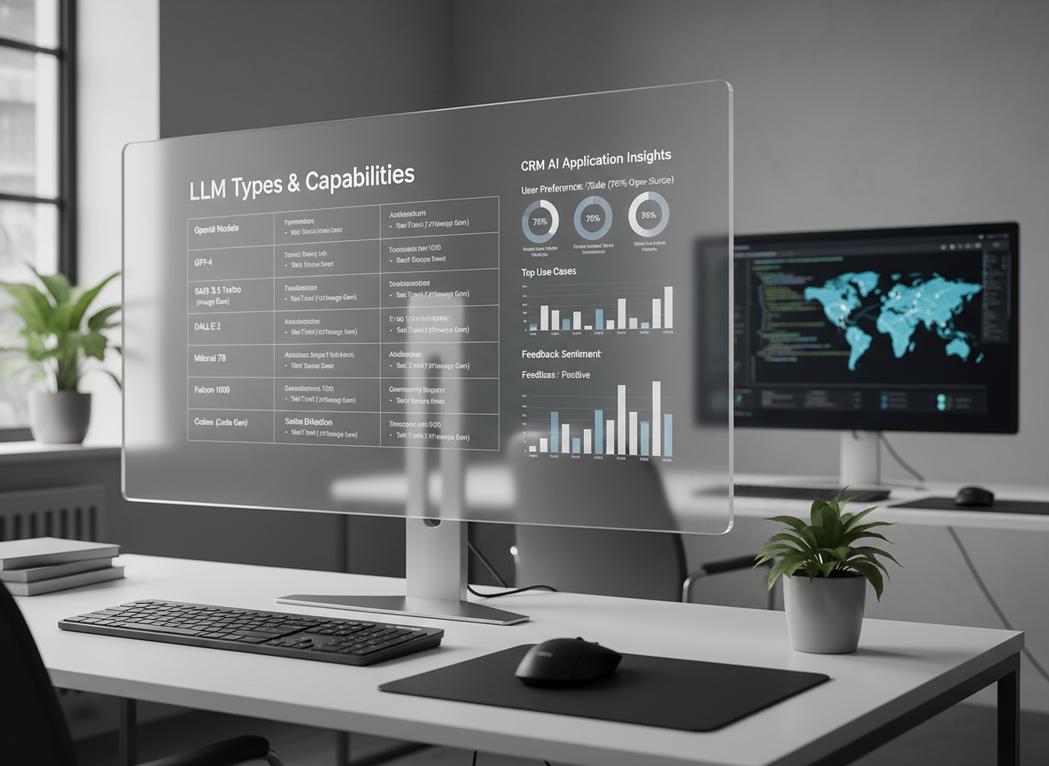
Choosing an LLM isn’t just about picking the trendiest option. It directly impacts your project’s success and your team’s efficiency. Think of it as selecting the right engine for a custom car: the wrong one wastes fuel and limits performance. At Growth Design Studio, our problem-first approach ensures we select the optimal LLM architecture tailored to your specific business challenges, guaranteeing practical automation design and real business outcomes.
Performance, Cost, and Reliability Trade-offs
Every LLM comes with its own set of trade-offs. You might gain incredible reasoning power with one, but pay a premium for every call. Another might be free to use but require significant effort to get reliable outputs. Balancing these factors is crucial for any automation initiative.
Long-Term Strategic Impact
The LLM you choose today can shape your future automation capabilities. It affects how easily you can customize, scale, and integrate new AI features down the line. A thoughtful decision now avoids costly reworks later.
Overview of Popular LLM Options
The landscape of LLMs is growing fast. Knowing your options helps you make an informed decision for your automation goals.
OpenAI Models (GPT-4, GPT-4o)
OpenAI offers powerful, state-of-the-art models like GPT-4 and GPT-4o. These are known for their strong general knowledge, advanced reasoning, and ease of use through APIs. They’re often a go-to for complex tasks when high accuracy is paramount.
Open-Source Models (Llama, Mistral, Falcon)
A growing number of open-source models, like Llama, Mistral, and Falcon, provide compelling alternatives. These models are often freely available, allowing for greater transparency and community-driven development. They offer flexibility, especially for specific use cases. Many resources guide developers on how to build LLM apps using these models for AI automation (Udemy, “AI Automation: Build LLM Apps & AI-Agents with n8n & APIs”). Growth Design Studio leverages a range of modern AI models and tools like n8n to build robust AI voice agents, customer support automation, and sales automation solutions.
Cloud-Hosted vs. Self-Hosted Models
You can run LLMs in the cloud via API services or host them on your own infrastructure. Cloud-hosted solutions are simpler to set up, while self-hosted models offer maximum control over data and environment. For a deeper dive into starting with these, check out our AI automation vs traditional automation guide.
Comparing OpenAI and Open-Source LLMs

Let’s break down how these two categories stack up across key decision points for ai automation: build LLM apps.
Accuracy and Reasoning
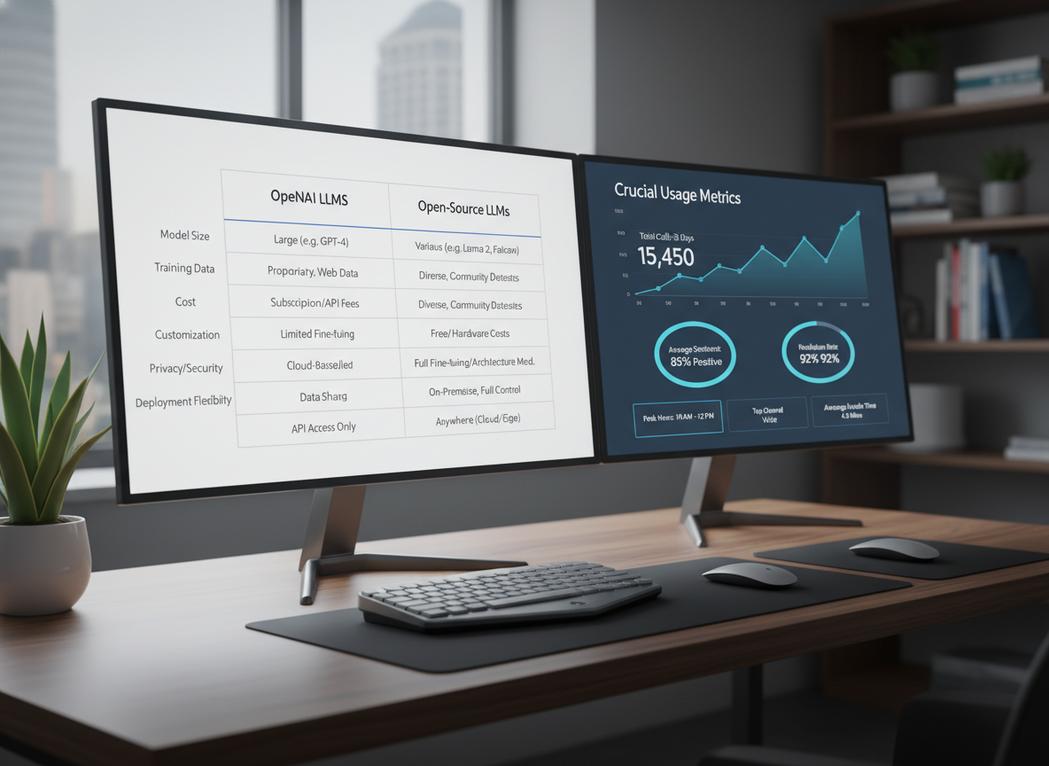
OpenAI models generally lead in raw reasoning power and factual accuracy for broad tasks. They handle nuanced requests and complex prompts with impressive results. Open-source models are rapidly catching up, and for domain-specific tasks, fine-tuned open-source LLMs can often match or even surpass proprietary models.
Customisation and Control
This is where open-source models shine. You can fine-tune them with your own data, modify their architecture, and even integrate them deeply into existing systems without vendor limitations. Proprietary models offer customization through prompt engineering or API parameters, but direct model modifications are off-limits. This is crucial when you want to build LLM apps that are highly tailored. Growth Design Studio excels at crafting custom API integrations and end-to-end workflow orchestration, ensuring your LLM apps are precisely adapted to your operational needs.
Data Privacy and Compliance
Using cloud-based OpenAI models means your data is processed by their servers, which might be a concern for highly sensitive information. Open-source models, especially when self-hosted, give you complete control over where and how your data is handled. This can be a deal-breaker for compliance in regulated industries.
Cost and Scalability
OpenAI models come with a per-token usage fee, which can add up quickly with high-volume ai automation: build LLM apps. Open-source models have no direct usage fees, but you incur infrastructure costs (servers, GPUs). For smaller projects or initial testing, OpenAI might be cheaper, but large-scale, consistent usage often favors open-source for cost efficiency. Growth Design Studio helps clients evaluate these long-term cost implications, ensuring scalable and cost-effective automation solutions that deliver strong ROI. Learn more about automated customer support benefits powered by these choices.
LLM Selection Criteria for Automation Use Cases
When you’re ready to build LLM apps for automation, these criteria will guide your choice. Growth Design Studio employs a rigorous evaluation process, aligning LLM capabilities with your specific project requirements.
Task Complexity
For simple tasks like content generation or basic data extraction, many open-source models will do the job efficiently. For complex reasoning, multi-step processes, or nuanced customer interactions, the advanced capabilities of GPT-4 or GPT-4o might be necessary. To understand how LLMs reason for various tasks, you first need to “understand how LLMs reason” (“How to Build LLM Apps, AI Agents and Automated Workflows”).
Data Sensitivity
If your automation involves sensitive customer data, proprietary trade secrets, or regulated information, self-hosting an open-source model provides the highest level of control and peace of mind regarding data privacy. Our solutions are built using secure, scalable automation frameworks with best practices for data handling and workflow reliability. Avoid common pitfalls by reading about when 24/7 chatbots frustrate customers.
Latency Requirements
For real-time applications, like chatbots or instant data validation, the response time (latency) of your chosen LLM is critical. API-based models generally offer predictable latency, while self-hosted models depend entirely on your infrastructure.
Budget Constraints
Define your budget for both usage costs (tokens) and infrastructure. Sometimes, investing in hardware for an open-source model offers a better long-term ROI than recurring API fees. For getting started with AI automation, some courses can help you “build LLM apps” without huge initial investments (“AI Automation: Build LLM Apps for Smarter Workflows”).
Enterprise Considerations (Especially for India)
Businesses, particularly in regions like India, have unique factors to weigh.
Regulatory and Data Residency Concerns
Local data residency laws and industry-specific regulations can dictate where your data must be stored and processed. Self-hosting open-source LLMs within a local data center directly addresses these concerns, offering greater compliance.
Infrastructure Readiness
Running powerful open-source LLMs requires robust GPU infrastructure. Enterprises need to assess their current IT capabilities or plan for significant investment in hardware and specialized talent.
Vendor Lock-In Risks
Relying solely on one proprietary LLM vendor can create lock-in. Switching later can be costly and disruptive. A hybrid approach or a commitment to open-source models offers more flexibility and reduces this risk.
Hybrid LLM Strategies
You don’t always have to pick just one. Many businesses find success by combining the strengths of both.
Combining Proprietary and Open-Source Models
Imagine using GPT-4 for highly creative content generation, while a fine-tuned open-source model handles internal summarization tasks. This approach optimizes cost and performance for different workflows.
Routing Tasks Across Models
With tools like n8n or custom APIs, you can build automation workflows that intelligently route tasks to the most suitable LLM. Simple queries go to a low-cost open-source model, while complex analytical tasks are sent to a more powerful, albeit pricier, proprietary model. This is a common strategy when learning how to “build LLM apps” for complex AI agents (“AI Automation: Build LLM Apps & AI-Agents with n8n & APIs”). Growth Design Studio specializes in workflow orchestration using tools like n8n to implement such intelligent routing, optimizing performance and cost efficiency for our clients.
How to Make the Final LLM Decision
Don’t commit to a single model without testing.
Pilot Projects and Benchmarks
Start small. Run pilot projects with both OpenAI and open-source alternatives on real business data. Benchmark their performance against your specific criteria: accuracy, speed, cost, and ease of integration.
Evaluation Frameworks
Develop a clear framework for evaluation. What are your non-negotiables? What are your nice-to-haves? Use real or estimated numbers: “Can this reduce our customer support response time by 30%?” or “Will this cut data processing costs by 20%?”
Building the Right LLM Stack
Choosing the right LLM for your ai automation: build LLM apps journey isn’t a one-size-fits-all problem. It means balancing performance, cost, control, and privacy against your unique business needs and long-term vision. By carefully evaluating each option and testing with real-world scenarios, you can build an AI stack that truly works for you. Growth Design Studio helps small and mid-sized businesses build effective AI stacks, focusing on practical automation design and fast implementation to achieve measurable business outcomes.
Want this automation done for you? Book your free audit with Growth Design Studio to discover custom-built automation solutions.
Frequently Asked Questions
What is the best LLM for beginners in AI automation: build LLM apps?
For beginners, start with OpenAI’s GPT models via their easy API. If you’re ready for more control, explore open-source options like Llama. Check our beginner’s guide for step-by-step instructions.
How do costs compare between OpenAI and open-source LLMs?
OpenAI charges per token, ideal for low-volume use, while open-source requires upfront infrastructure but no ongoing fees, better for scale. Growth Design Studio can help assess your ROI.
Can I use both OpenAI and open-source models together?
Yes, hybrid strategies route tasks efficiently. Tools like n8n make this seamless for ai automation: build LLM apps.
What about data privacy in LLM apps?
Self-hosted open-source models offer the best privacy control, especially for regulated industries like those in India.
Conclusion
In the world of ai automation: build LLM apps, the choice between OpenAI and open-source LLMs boils down to your priorities: speed and ease vs. control and cost. Test both, align with your goals, and partner with experts like Growth Design Studio for tailored success. Ready to automate smarter? Contact us for a free consultation.