


Wondering how to build LLM apps that actually reduce manual work and handle complex requests? LLM apps act like intelligent digital assistants, powering AI automation across your operations. In this guide, you’ll learn how LLM apps work, what goes into building them, and how they improve productivity at scale. Growth Design Studio specializes in custom-built LLM automation systems that help small and mid-sized businesses save time, eliminate repetitive tasks, and grow revenue.
What Are LLM Apps in AI Automation?

LLM apps are a game-changer for businesses looking to streamline tasks and boost productivity in AI automation: build LLM apps to bring advanced AI into daily workflows.
What Is a Large Language Model (LLM)?
At its core, a Large Language Model (LLM) is a type of artificial intelligence trained on massive amounts of text data. Think of it as a highly sophisticated predictor of language. It learns patterns, grammar, and context, allowing it to generate human-like text, answer questions, and even write code. These models form the brains behind AI automation that can understand and process language in remarkable ways, a key area of expertise for Growth Design Studio in developing practical automation designs.
How LLM Apps Differ from Chatbots
While chatbots often follow predefined rules or scripts, LLM apps are far more dynamic. A basic chatbot might guide you through a fixed menu, but an LLM app can understand nuanced questions, draw on a broad knowledge base, and even reason through complex problems. They don’t just parrot back information; they process it, making them essential tools for sophisticated interactions and problem-solving, which is precisely the kind of advanced AI solution Growth Design Studio implements for its clients.
How to Build LLM Apps: The Mechanics
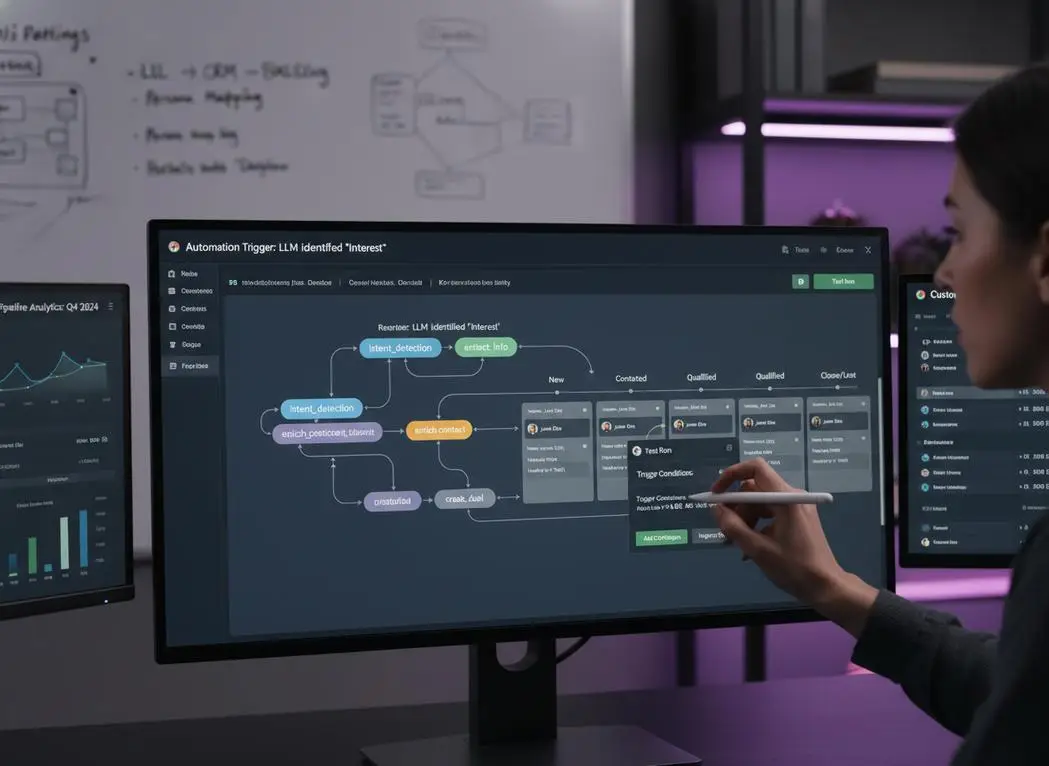
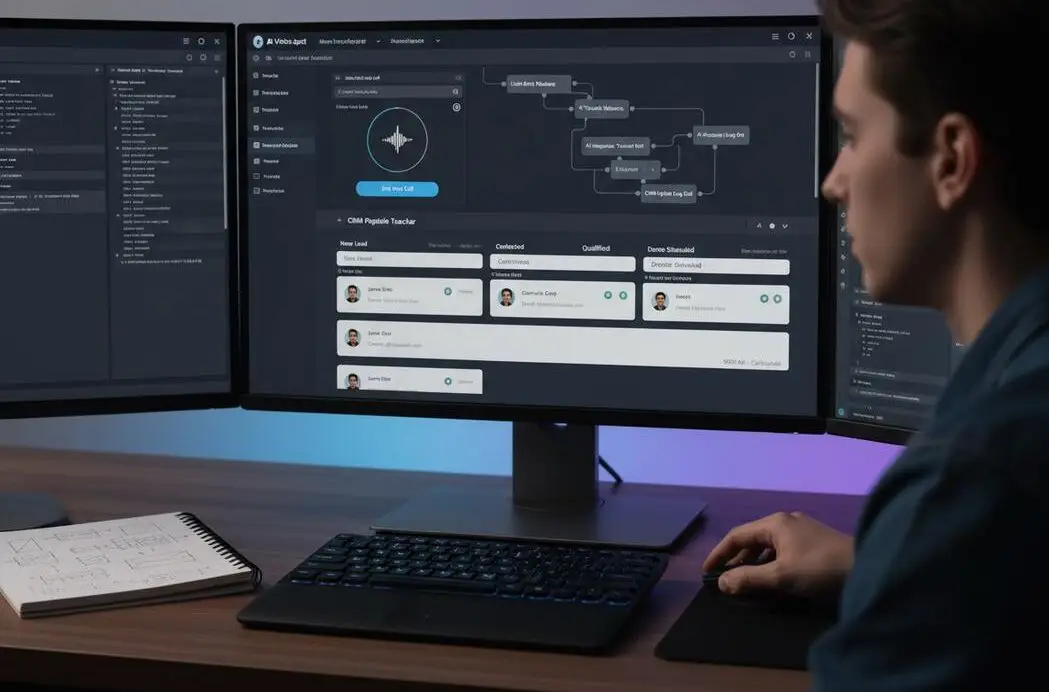
Building LLM apps involves connecting these powerful language models to specific business needs in AI automation. They aren’t just standalone AI; they are integrated systems designed for practical outcomes.
Inputs, Prompts, and Outputs
Every LLM app starts with an input, usually a text prompt. This prompt is your instruction to the model. For example, “Summarize this client email” or “Draft a social media post about our new service.” The LLM processes this input and generates an output—the summary, the draft, or an answer to your question. The quality of your prompt directly impacts the usefulness of the output.
Context, Memory, and Reasoning
For an LLM app to be truly effective, it needs more than just a single prompt-response cycle. It needs to maintain context over multiple interactions, simulating a “memory” of previous conversations or data. This is crucial for building LLM apps that can handle ongoing tasks or follow-up questions. According to an article on dev.to, understanding how LLMs reason is a foundational step in learning AI automation, allowing them to apply logic and make informed decisions within an application.
APIs and Model Access
To use LLMs, developers often access them through Application Programming Interfaces (APIs). These APIs act as connectors, allowing your applications to send prompts to the LLM and receive its responses. Tools like n8n, for instance, are widely used for AI automation to orchestrate complex workflows involving LLMs and various APIs. Growth Design Studio frequently leverages n8n and custom API integrations to build robust, end-to-end workflow orchestrations. This setup lets you integrate powerful AI capabilities without deep coding knowledge.
Types and Real-World Examples of LLM Apps

The versatility of LLM apps means they can serve many functions, from handling customer queries to automating internal operations in AI automation.
Types of LLM Applications
Conversational Interfaces
These provide natural language interactions for users. Think of AI assistants that can schedule meetings, answer FAQs, or help customers troubleshoot issues without human intervention. Growth Design Studio specializes in developing AI voice agents (inbound & outbound) and customer support automation solutions that leverage these conversational interfaces.
Workflow Automation Tools
LLM apps can automate entire sequences of tasks. They can read invoices, extract key data, and then trigger actions in other systems, saving significant time. This is a core part of how businesses use automation to improve their processes, and Growth Design Studio excels at providing end-to-end workflow orchestration and sales automation tailored to client needs.
Knowledge Assistants and Search
Instead of sifting through countless documents, an LLM-powered knowledge assistant can quickly find specific information, summarize lengthy reports, or even generate answers based on your internal data. This drastically cuts down on research time.
Decision Support Systems
These applications help users make better decisions by analyzing data, identifying trends, and providing insights in an easily understandable format. They can process complex information and highlight critical factors you might otherwise miss.
Real-World Examples
Businesses are already using AI automation and LLM apps to tackle real problems and achieve measurable results.
Customer Support Assistants
Imagine an LLM app handling first-line customer support. It can answer common questions, route complex issues to the right human agent, and even draft personalized responses, cutting down response times and improving customer satisfaction. Growth Design Studio has a proven track record in implementing customer support automation solutions that significantly enhance CX.
Internal Knowledge Bots
Many companies struggle with employees spending hours searching for internal documents or policies. An internal knowledge bot, powered by an LLM, can quickly pull up relevant information, making onboarding faster and boosting team efficiency.
Sales and Marketing Automation
LLM apps can personalize marketing emails, generate social media content, or even help qualify leads by analyzing customer interactions. This allows sales and marketing teams to focus on strategy rather than repetitive content creation. Growth Design Studio builds effective sales and CRM automation, including cold outreach automation, to empower sales and marketing efforts.
Benefits, Limitations, and Getting Started with Building LLM Apps
The push to build LLM apps isn’t just about novelty; it’s about achieving concrete business advantages in AI automation.
Why Businesses Are Investing
Speed, Scale, and Cost Efficiency
LLM apps can process vast amounts of data and perform tasks at a scale and speed impossible for human teams. This leads to significant cost-saving and allows businesses to scale operations without proportional increases in headcount. Tasks that once took hours can now be completed in minutes, directly aligning with Growth Design Studio’s mission to help businesses save time and reduce manual work.
Human-like Interfaces for Complex Tasks
These applications make complex tasks more accessible. Users can interact with sophisticated systems using natural language, reducing the learning curve and making powerful tools available to a wider range of employees. It helps businesses save time by simplifying interactions.
Limitations and Risks
Accuracy and Hallucinations
LLMs can sometimes generate information that sounds plausible but is factually incorrect—this is known as “hallucination.” It’s a key reason why human oversight is still critical, especially in sensitive applications. The model is a predictor, not always a source of truth.
Data Privacy and Security
Feeding sensitive business data into an LLM requires robust data privacy and security protocols. Ensuring that proprietary information remains protected and isn’t inadvertently exposed is a paramount concern. Growth Design Studio builds solutions using secure, scalable automation frameworks with best practices for data handling and workflow reliability.
Operational Costs
While LLM apps can lead to long-term cost savings, the initial setup, training, and ongoing operational costs for powerful models can be substantial. Businesses need to weigh these investments against the projected ROI. Growth Design Studio focuses on a problem-first approach, designing practical automation with a clear focus on real business outcomes and measurable ROI.
LLM Apps vs Traditional Software
Traditional software follows deterministic logic: if A, then B. The output is always predictable. LLM apps, on the other hand, are probabilistic. Their responses are based on probabilities derived from their training data, meaning the output can vary slightly even with identical inputs. This makes them flexible but also less predictable. LLM apps excel at tasks requiring understanding, generation, and summarization of natural language. For precise calculations or rigid rules, traditional software remains better. Combining both optimizes your system.
Getting Started
Ready to explore how to build LLM apps for your business? Start by identifying repetitive tasks that involve language processing or data interpretation. Many resources, like courses on Udemy, can guide you through building practical AI agents and LLM-powered applications using tools like n8n and APIs. Learning how LLMs reason and building simple function-calling apps are key initial steps. For businesses seeking expert guidance and fast implementation, Growth Design Studio offers custom-built automation solutions designed to address specific challenges and deliver tangible results.
Frequently Asked Questions
What are LLM apps in AI automation?
LLM apps are applications powered by Large Language Models that enable natural language processing for tasks like automation, customer support, and content generation. They go beyond simple chatbots by understanding context and reasoning.
How do I start building LLM apps?
Begin by identifying tasks that involve text processing, learn prompting techniques, and use APIs from providers like OpenAI. Tools like n8n can help integrate without heavy coding. For custom needs, consult experts like Growth Design Studio.
What are the risks of using LLM apps?
Key risks include hallucinations (inaccurate outputs), data privacy issues, and initial costs. Always implement human oversight and secure protocols to mitigate these.
Can LLM apps replace human workers?
No, they automate repetitive tasks to enhance efficiency, but human oversight is essential for complex decisions and creativity.
Conclusion
Boost your business with intelligent automation through AI automation: build LLM apps that save time, cut costs, and improve customer experiences. By understanding how these applications work and where they fit into your operations, you can unlock powerful new efficiencies. From automating customer support to streamlining internal knowledge sharing, the right LLM application can significantly improve your daily workflows and deliver clear results. Growth Design Studio helps small and mid-sized businesses achieve these efficiencies through custom AI automation and systems.
Want this automation done for you? Book your free automation audit with Growth Design Studio today.